Search Results
Search this site
13 results found with an empty search
- नूँह (Nuh) Experiences
Demonstrating "Eye Yoga" to the kids I've written before about what it's like to drive from Gurgaon to the villages in the नूँह (typically transliterated as "Nooh" or "Nuh") district of Haryana I've been working in---how, given an hour's car ride, office buildings ultimately make way for water buffalo shelters. I've written before about my general feelings regarding a certain field visit or another---never delving too far into the nitty-gritty details of what it is that my job there looks like. I've even written before about my time spent at the Sehgal Foundation office, my daily life---developing lesson plans and activities that go on to then be field tested. Given all of that, I think that now, a month and a half into my internship, it is finally time to draw back the curtain and tell of exactly what my research and project here in India are all about. It's certainly well past due, and so, in a rather fitting manner, I devote this blog to my "Nooh," and not-so-new, experiences in the field. --------------------------------------- Today's session started, as always, with an introduction question. My supervisor and I had planned to jump right into the lesson today, but thanks to the fact that we had three new students participating, we figured it would be best to give everyone the chance to get to know one another a little better. Coming up with a question on the fly, I asked each student to share what their favorite part of the last two sessions had been. I hoped that this would help the three new recruits feel a little more in the know---we'd already covered the basics of vitamin A, signs of its deficiency, foods that are richest in it, and more, all with games and activities to boot. As the students shared their answers, I was blown away but what they had found to be most enjoyable. My Eye Health Bingo Boards and DIY Eye Checks were a smash hit, just like they had been in the last village I'd worked with, but what struck me more were the little things these kids remembered from each session. One student shared that he had enjoyed our very first activity together, a blind drawing game we'd used to demonstrate the importance of eyesight. Another girl stated that her favorite part had been the obstacle course we set up using half sheets of paper arranged on the floor, labeled with dangers to show the importance of avoiding unhealthy or potentially harmful decisions. Both of these activities were things that I had put much less work into, and we had spent much less time on as a group, and yet they remembered. Those activities had forwarded singular points along the line of reasoning we had used to back each session's objective, small moments from lessons packed with information and engagement, and yet these niche interactions were what the kids had found most enjoyable. The group went on like this, sharing the moments and memories they had most enjoyed from our last two sessions together. With that new knowledge, I felt on top of the world. Somehow, through these lessons, I had found a way to fit the interests of a group of children whose lives were completely unlike what mine had looked like at their age. Through trial and error, testing and improvement, I had finally put together a finalized set of vitamin A sessions, and this group was the first to receive it. Their answers, which were varied, individualized, and steeped in excitement, showed me for the first time that I really had created something special. The smiles on these kids' faces as they shared their stories told me more than even their words. I was less than ten minutes into a session that would go on to be over an hour and a half long, and yet there I was, contemplating the bigger picture, and already beaming ear-to-ear at the front of the room. When I talk about my job here having an incredible sense of fulfillment, this is exactly what I mean. Following this introductory piece, we proceeded to a pop quiz of sorts. Asking questions based on the knowledge they had gained during the previous sessions, we tested their abilities to remember the pertinent details we discussed together one to two weeks back. It is with confidence and a little bit of pride that I tell you not a single question was missed amongst the group. From which parts of the body vitamin A best supports, to the "SUPER Food" posters I developed to help kids visualize which foods were most beneficial to eye health, these kids aced every question that came their way. As I looked out around the room, I stood for a moment in awe. Already, these seven- to ten-year-olds knew more about vitamin A and eye health than I had ever picked up in school, and we hadn't even completed our third and fourth sessions with them. I'll admit it, I'm not a prideful person, but in that moment I was truly proud. Between the memories shared and the knowledge dispensed, I knew that I had made an impact on these kids' lives, just as they had already profoundly affected mine. Next up was eye yoga, a couple of exercises that help to increase circulation to the eyes, keep them moist and clear of foreign objects, and provide a fun and engaging way to practice eye health activities. I stood at the front of the room and demonstrated as a sea of sky blue school uniforms looked at me for direction. I moved my eyes this way and that, around in a clockwise, then counterclockwise manner, and the students followed my lead. We laughed together as some would take a pause with me, only to see their friends still very much "locked in," looking around the room like they were wearing googly eyes. We did a focus exercise, a blinking game, and ended by rubbing our hands together, then gently placing them on our faces to give our eyes a warm blanket at the end of the activity. The kids loved it, and best of all, there are proven benefits linked to regularly taking part in these kinds of activities. A huge win-win. We collected students' homework assignments, a Vitamin A Detective Worksheet, in which they listed what foods they had taken for breakfast, lunch, and dinner over the past five days, and told of whether or not there was vitamin A present in each. Discussing together, the children shared their opinions about the assignment. I jotted down the particular things they said they enjoyed about it, and upon asking for improvements, jotted down those ideas as well. I'd be looking through the data from these worksheets at the office tomorrow, hoping to find that the students were able to correctly identify which meals of theirs contained vitamin A, as well as what the source was (spoiler alert: they do, and with incredible accuracy!). As we moved into the new content for the day, we began with a rock, paper, scissors tournament. This may seem like an odd way to learn anything about vitamin A or eye health, but hear me out before you make that assessment: Today's lesson would be all about making healthy choices, and what better way to show the impact of one's choices than with a game of rock, paper, scissors? It's fun and interactive, but also serves a distinct purpose in relation to our lesson for the day---perfect for innocuously demonstrating one of the key takeaways we aimed to share. And so it began, girls versus girls and boys versus boys. Given the large Muslim population in this community (Nuh is one of the only districts with a Muslim majority in all of India), the bridging of genders is not generally viewed with the same leniency as it is in the West, and so we split the group accordingly. After one round of rock, paper, scissors, half of the children were "out" and returned to their seats. Another round and we were down to just a quarter, one more and there was only one boy and one girl left. The grand finale pitted these two against one another, a taller, older girl, maybe 11 or 12, wearing her school uniform of a light blue kurta, dark blue pants, and a dark blue scarf to match, against a shorter boy, the youngest of the bunch, likely 7 or 8 by the looks of it, wearing his uniform, a light blue button-down shirt, western style, with the same dark blue pants to match. They stood at the front of the room, with all eyes from the peanut gallery intently focused on their hands. Tension rose after each call: Rock... Paper... Scissors... The girl threw rock and the boy threw paper. The class, thoroughly entertained and fully enthused by the action, erupted in clapping and cheers. It wouldn't have mattered who won in the end, as all that was truly being celebrated was the excitement of the moment. The two kids returned to their seats, and we soon began to connect the dots with the group about the impacts of the choices they make. As we moved into the strictly educational portion of the session, discussing the importance of making healthy decisions, I couldn't help but notice the weather outside. Because my supervisor, Aparna, does most* of the talking when it comes to these lessons (*more on that in a little bit), whenever there isn't an activity I'm directly involved in, my mind tends to wander a bit. Typically, these wanderings are entirely contained within my notebook, jotting down whatever thoughts and ideas I have, usually relating to improving the current session or adding to a future one. Today, however, for one brief minute, I made the most of the moment I was in and surveyed my surroundings. Ahead of me were the children, sitting in two rows and about ten tiny columns on the green mat they'd laid out at the start of the lesson. The floor was concrete, and though we were under a roof, the room was thoroughly open-air. To my right was a wall, a few doors to inner classrooms, and three floor-to-ceiling murals, one depicting the water cycle, and two showing geometry---shapes and angles---with the names of each in both Hindi and English. The paint had worn through near the foot of the murals, but the middles and tops of each were still largely intact. A look to my left offered a stunning scene, the central courtyard of the school, where tall patches of grass grew between buildings---the classrooms, kitchen, playground, and washrooms. Two golden herons, a medium-sized bird with long, slender legs, strutted through this tall grass, their yellow beaks and pale bodies peeking out over the blades of green. Children, too, walked through the space, playing with one another, flying small kites, and lying in the shade of the many nearby trees. A group of young boys had gathered under the tree nearest to our class space, as they listened in on the lesson---an unexpected, but wholly welcome addition to our group. There was one path of laid brick that many of the boys sat on, and it connected each of the buildings. More commonplace in use than this single paved route, however, were the "desire paths" carved into the soil itself by the simple act of children's feet trampling the grass day after day. I watched as the school kids quite literally frolicked in this small green space, and I found that joy to be infectious. I turned my attention back to the students in front of me and got back to work. As my eyes had been wandering, Aparna discussed the impact of hobbies and habits on our overall health---how choosing to take part in healthy activities over unhealthy ones can help lead to a much more problem-free life moving forward. As these words resonated with the children, I was once again reading through my next role: Explaining the premise of our next game, entirely in Hindi. I had put together an Eye Health Uno game, based on the idea that healthy activities would reward players and unhealthy ones would add to their struggle. As such, each card, which featured a pictogram of some activity being done, was rated upon this scale, with "healthy" cards being seen as regular or wild, and "unhealthy" ones being turned into draw twos, draw fours, or skips. While Aparna would be explaining the rules, it was my job, in slow and painful Hindi, to explain the pictures on each card and why they were given the designation of "healthy" or "unhealthy." I should start by saying that this was a bout of self-implicated suffering, and by suffering, I mean enjoyment. I was the one who brought up the idea of my explaining these cards, printing out my cheat-sheet, which had the translation written in English and the actual lines written in both Hindi and Anglicized scripts, just one day prior to this. I spent the night running the lines aloud, surely botching every other word, but at least getting comfortable with my material. As I stood before the class, feeling particularly vulnerable, I began. It's been a long time since I felt so out of my depth reading something from another language aloud. Flashback to nearly two years ago, as I began school in Malaysia, and this is exactly what that felt like. I've grown accustomed to being surrounded by nothing but Hindi in the field and every time I leave the office, but this was different. I've been making due with my little phrases I know here and there as I've navigated my new life here in India, but in this moment, I felt truly exposed. Though I know how to read the Hindi script, I was butchering pronunciations left and right. I then relied on the Anglicized version as a crutch and got away with it for a while, but I could tell that my Hindi was just miserable. The effort was there, though, and what matters most is that my words were intelligible, which, despite my horrid mishaps, they somehow were. Aparna stepped in to correct a phrase or two here and there, but for the most part, I got a passing grade. Not a high pass, mind you, I'm talking a C at best and in all likelihood something closer to a D+, but hey, it was an experience well worth the while. The best part of all of this was when, as I looked up from my cramped script full of notes, I saw the eyes of the entire class trained on me. I knew for a fact that each and every one of these kids was paying attention to the lesson I was giving, whether it be explaining the importance of getting enough sleep or the dangers of taking too much prepackaged or junk foods. As I finished, the kids gave me a round of applause. I was abashed, a little ashamed, though I had laughed off each of those emotions as I made more and more mistakes. By the time I was done, and receiving this ovation, all I was left with was joy. It wasn't a prideful joy in any sense, no, but it certainly wasn't a timid one. I had given this insane idea a shot, and it had worked, if not to the extent that I had hoped, then at least to the extent of functionality. Following this linguistic experiment, Aparna went on to explain to rules of our Eye Health Uno game. The day before, I had printed out 16 sheets of paper and cut out the 128 cards necessary for two decks. That certainly doesn't sound like a gruelling task, but believe me, after a day chalk full of office work and ending it by cutting so much with a pair of scissors that your hand won't stop cramping, these cards were certainly a labor of love. Add to that the hours I'd spent designing and refining the cards on Canva before I printed them, and that starts to give a sense of my attachment to these activities and my dedication to these kids. I would do anything to help ensure that these kids find learning about eye health and vitamin A to be fun, from sacrificing any sense of linguistic prowess at the front of the room to spending an hour hunched over a garbage can snipping away at cards I can only hope these kids enjoy playing with. I tell you truly that this was all for the best. With rules now explained, we began. The girls circled around one deck, and the boys around another. The Sehgal Foundation field officer who had been helping us out these past few visits, Kusoomji (I tag on the "-ji" mentioned in my last blog for added respect), assisted with translating as I helped the boys get set while Aparna got a start with the girls. Things were going along swimmingly for the girls, and they picked up on the rules quickly. For the boys, there were still a few struggle spots, like understanding that you could match the color or the picture of the card and how turns worked... Alright, I'll admit it, there were a lot of struggle spots. I had tried my best, but my Hindi was limited, and Kusoomji's English was too. Aparna stopped by to check in with the group and suggested that we switch. While she explained away to the boys, the girls were genuinely understanding the game, which brought me the best kind of warm fuzzies inside my heart. They got stuck only once, when they ran out of cards from the draw pile, so following that, it became my sole responsibility to shuffle the discard pile back into the deck as necessary. I took my job very seriously and was invested in the game. As one girl announced, "Ek card, ek card!" (One card, one card!), the boys erupted into cries shortly thereafter. All I could make out was "Cheating! Cheating!" in a thick Indian accent, and the giggles of friends as they, too, were in on the act. Though the statements were completely unrelated, I couldn't help but laugh at the dichotomy that was present in this moment. I turned back to the boys after a while, and they had gotten the game down pat by then, which stirred another little something in my heart. As the Uno games wrapped up, and the Hindi phrases "Draw two! You stared at the sun!" and "Wild card! I'm eating vitamin A-rich foods!" wound down, I was genuinely impressed by the group that sat in front of me. They had learned so much in just three sessions, and I was sad to realize that overmorrow (two days from now) would be my last time visiting these kids. I left the sentimentality behind as best I could, and followed along as Aparna began to explain the links between the game we had just played and the impacts of our choices in the real world. She reiterated the main points from throughout the day and drove home the ideas we intended to leave them with, about forming healthy habits, choosing to partake in healthy activities, and avoiding things that could pose a danger to their health. We gave a simple homework assignment, a single sheet of A4 paper, which briefly detailed the lessons taught during each session. Scattered around the page were the vitamin A-rich fruits, veggies, and foods we'd spent so much time discussing. This was a culmination of all their learnings, two paragraphs from each session, and it was the students' job to go home and share this information with their parents. It was a simple exercise, and yet it had the potential to double or triple the number of lives impacted by our work. I passed out the pastel papers to each student as Aparna explained the assignment, and the kids all smiled as I came by. We finished off the session with some discussion and reflection on the day's learnings. The atmosphere was positive and bright, as was the weather outside. Our last two sessions had been in the early monsoon rains, but today was something different. Today was something special. That was particularly evident to me as I handed each Uno deck off to one boy and one girl who had shown particular interest and aptitude in learning the rules. Their eyes held a certain sparkle as I told them they were theirs to keep, so long as they shared with their friends. By now, we had dismissed the class, packed up our materials, thanked the headmaster and the other teachers whose time we'd taken up to meet with these kids, and were making our way back to the cab. Leaving through that painted gate is always the lowest part of my day when on a field visit, but today it felt oddly comforting. I knew that in leaving, I had given something of myself to these kids. It also helped to know that I would be back in just two days' time. And so we left. We had some more adventures that afternoon working with malnourished women, but that's a story for another time. For right now, I'm focused on what has done so much to shape my time here and my perspective on the world: working in these rural schools, with these incredible kids. I'm forever grateful for what they've given me: an abundance of नूँह Experiences. --------------------------------------- P.S. I know the photos have nothing to do with the subject material---that's because they're the only ones I have. The next post I make will have a whole lot more, don't you worry :) P.P.S. Thanks for sticking around and reading all the way through this 3600-word behemoth of a blog. I truly appreciate your time, attention, and patience. As a little reward, here's a kitten to rest your eyes looking at after reading for so long. ⠀⠀⠀⠀⠀⠀⠀⢠⣿⣿⣦⠀⠀⠀⠀⠀⠀⠀⠀⠀⢀⣴⣿⣦⡀⠀⠀⠀⠀⠀⠀⠀ ⠀⠀⠀⠀⠀⠀⢠⣿⣿⣿⣿⣆⠀⠀⠀⠀⠀⠀⠀⠀⣾⣿⣿⣿⣷⠀⠀⠀⠀⠀⠀⠀ ⠀⠀⠀⠀⠀⢀⣾⣿⣿⣿⣿⣿⡆⠀⠀⠀⠀⠀⠀⣸⣿⣿⣿⣿⣿⡆⠀⠀⠀⠀⠀⠀ ⠀⠀⠀⠀⠀⣾⣿⣿⣿⣿⣿⣿⣿⡀⠀⠀⠀⠀⢀⣿⣿⣿⣿⣿⣿⣿⠀⠀⠀⠀⠀⠀ ⠀⠀⠀⠀⢸⣿⣿⣿⣿⣿⣿⣿⣿⣧⠀⠀⠀⠀⣼⣿⣿⣿⣿⣿⣿⣿⡇⠀⠀⠀⠀⠀ ⠀⠀⠀⠀⣿⣿⣿⣿⣿⣿⣿⣿⣿⣿⣠⣤⣤⣼⣿⣿⣿⣿⣿⣿⣿⣿⣷⠀⠀⠀⠀⠀ ⠀⠀⠀⢀⣿⣿⣿⣿⣿⣿⣿⣿⣿⣿⣿⣿⣿⣿⣿⣿⣿⣿⣿⣿⣿⣿⣿⠀⠀⠀⠀⠀ ⠀⠀⠀⢸⣿⣿⣿⣿⣿⣿⣿⣿⣿⣿⣿⣿⣿⣿⣿⣿⣿⣿⣿⣿⣿⣿⣿⠀⠀⠀⠀⠀ ⠀⠀⠀⠘⣿⣿⣿⣿⠟⠁⠀⠀⠀⠹⣿⣿⣿⣿⣿⠟⠁⠀⠀⠹⣿⣿⣿⠇⠀⠀⠀⠀ ⠀⠀⠀⠀⣿⣿⣿⡇⠀⠀⠀⣾⣷⠀⢿⣿⣿⣿⣿⠀⣾⣷⠀⠀⢿⣿⣿⣿⠀⠀⠀⠀ ⠀⠀⠀⢠⣿⣿⣿⣷⡀⠀⠀⠙⠋⢀⣿⣿⣿⣿⣿⡀⠙⠋⠀⢀⣾⣿⣿⡇⠀⠀⠀⠀ ⢀⣀⣀⣀⣿⣿⣿⣿⣿⣶⣶⣶⣶⣾⣿⣿⣿⣾⣿⣷⣦⣤⣴⣿⣿⣿⣿⣤⠤⢤⣤⡄ ⠈⠉⠉⢉⣙⣿⣿⣿⣿⣿⣻⣿⣿⣿⣿⣿⣿⣿⣿⣿⣿⣿⣿⣿⣿⣿⣇⣀⣀⣀⡀⠀ ⠐⠚⠋⠉⢀⣬⡿⢿⣿⣿⣿⣿⣿⣿⣿⣿⣿⣿⣿⣿⣿⣿⣿⣿⡿⣥⣀⡀⠈⠀⠈⠛ ⠀⠀⠴⠚⠉⠀⠀⠀⠉⠛⣿⣿⣿⣿⣿⣿⣿⣿⣿⣿⡿⠛⠋⠁⠀⠀⠀⠉⠛⠢⠀⠀ ⠀⠀⠀⠀⠀⠀⠀⠀⠀⣸⣿⣿⣿⣿⣿⣿⣿⣿⣿⣿⡇⠀⠀⠀⠀⠀⠀⠀⠀⠀⠀⠀ ⠀⠀⠀⠀⠀⠀⠀⠀⣰⣿⣿⣿⣿⣿⣿⣿⣿⣿⣿⣿⣧⠀⠀⠀⠀⠀⠀⠀⠀⠀⠀⠀ ⠀⠀⠀⠀⠀⠀⠀⢠⣿⣿⣿⣿⣿⣿⣿⣿⣿⣿⣿⣿⣿⡀⠀⠀⠀⠀⠀⠀⠀⠀⠀⠀ ⠀⠀⠀⠀⠀⠀⢠⣿⣿⣿⣿⣿⣿⣿⣿⣿⣿⣿⣿⣿⣿⣇⠀⠀⠀⠀⠀⠀⠀⠀⠀⠀ ⠀⠀⠀⠀⠀⢠⣿⣿⣿⣿⣿⣿⣿⣿⣿⣿⣿⣾⣿⣿⣿⣿⡀⠀⠀⠀⠀⠀⠀⠀⠀⠀ ⠀⠀⠀⠀⢠⣿⣿⣿⣿⣿⣿⣿⣾⣿⣿⣿⣿⣿⣿⣿⣿⣿⣧⠀⠀⠀⠀⠀⠀⠀⠀⠀ ⠀⠀⠀⠀⣾⣿⣿⣿⣿⣿⣿⣿⣿⣿⣿⣿⣿⣿⣿⣿⣿⣿⣿⡄⠀⠀⠀⠀⠀⠀⠀⠀ ⠀⠀⠀⢸⣿⣿⣿⣿⣿⣿⣿⣿⣿⣿⣿⣿⣿⣿⣿⣿⣿⣿⣿⡇⠀⠀⠀⠀⠀⠀⠀⠀ Thanks!
- Seeds For Change
Students with their packets of seeds after our final session in Satputiyaka Seeds For Change is a book I read while in India about the lives and work of Dr. Surinder (Suri) and Mrs. Edda Sehgal. It was an inspiring tale of overcoming hardships, and, at least I found, of coming together in order to forward shared aspirations. The "seeds for change" referenced by the author here, Marly Cornell, are those that Dr. Sehgal helped to develop, further catalyzing the Green Revolution in India. Seeing as I'm working at the Foundation that the Sehgals established, I find it fitting to mention a very different set of "seeds for change" that I was fortunate enough to come across during my two months here. Allow me to elaborate: Last Friday, for me, marked the final time I would be visiting any of the villages in Nuh that have made my experience here so impactful and fulfilling. It was the final vitamin A session at our final school, and with that now behind me, this week, my last week in India, is to be focused solely on my presentation for the S M Sehgal Foundation and my research paper for the World Food Prize. Before I allow myself to succumb to the realization that my time here is nearing an end, I would much rather revisit the moment, rekindle the memories, and live out, once more, the dream of mine come true that has been working in these rural villages. --------------------------------------------------- In each of the sessions prior to this, there had been a homework assignment. Today was no different. Well, actually, I do suppose that it was rather different---you see, in the assignments before, all the students were asked to take home was a sheet of paper. Today, they were taking home seeds. As our final farewell, we wanted to give these kids something lasting, something a bit more tangible, a bit more reminiscent of our time together. And so these seeds, pumpkin, tomato, and spinach, were what we found to be the best way to go. Once ripe, all three are rich in vitamin A and are excellent foods for eye health overall. It was the perfect culmination of our lessons dedicated to both those overlapping subjects. The kids and I after the completion of our first session in Badarpur As I began to hand out these seeds to each student, putting the final note on this final lesson, I thought back to my very first field visit---not here in Satputiyaka, but in nearby Badarpur. It was my first taste of what life was like here in rural India, understanding how these children lived, and seeing with new eyes how best to engage with them and interact in a manner that best reflects upon their lived experiences. That first visit is what grounded me, informed my opinions, and allowed me to craft a worldview that now incorporates these new experiences and understandings I've come across. I remember the moments of genuine connection after we had finished our lesson for the day, where the students gave me and the two other interns who had come along beautifully designed tattoos with mehndi. For a week, those tattoos stayed on my hands, but unlike my eternal memories of that day, they began to fade. I know that first session will stick with me for a lifetime, and as I snapped back to the present, feeling the small packets of seeds in my hands and handing them to each student, I hoped that I was truly giving something back after all these kids had given me. The classroom and students in Ghasera I hoped that I was giving them more than just knowledge. My second field visit came back to me as my mind lingered on that point. That session had been with a group in yet another village, Ghasera, and it was the first of a series. I remember writing up the lesson plan for that day, aiming not just to dispense information, but to form a genuine bond with these kids. Through activities, games, fun little vitamin A "Super Food Posters," and more, I hoped that my lessons would be memorable for more than just the educational content. That group in Ghasera was my first time truly teaching these sessions, and I learned so much from them. I just hope I was able to teach them half of what they taught me, and that they found enjoyment in the activities I'd dreamed up or devoted myself to designing. The smiles on that group's faces proved that at least the latter half of that hope was true. By this point in my reminiscing, I was about halfway through the group. It dawned on me then just how well I recognized the faces of each of these kids. Of the 22 that sat in on the session today, I'd feel confident enough to pick every single one out of a schoolwide assembly. I found that realization to be striking, as in just four visits together, I felt I had gotten to know this group so well. My first visit to Satputiyaka (above) and my second to Ghasera (below) I couldn't help but think back to the first time I came to Satputiyaka, meeting with this particular group of children, during my third time visiting the field overall. We held two sessions that day, lesson two in the series for Ghasera and the initial session of a new, finalized series for Satputiyaka. After three visits, three villages, and three iterations of my vitamin A and eye health modules, we had finally arrived at something solid. The new group receiving our finalized sessions was dynamic, engaged, invested. They listened, they participated, they asked great questions and excitedly shared their experiences whenever asked. The kids of this village, as with the kids of all these areas, were truly something special. I ended my first session in this new setting of Satputiyaka feeling a certain sense of wonder, and a small pride and large joy in the fact that they had found my educational material and activities to be so engaging. Two photos from the third/final session in Ghasera I was almost finished handing out seeds by now, a package of pumpkin, tomato, and spinach to each student. I had finished with the first row of kids and was now well on my way through the second. As my reminiscing continued, I thought of my fourth field visit, which was the third and final session for Ghasera and the second for this group in Satputiyaka. With the kids from Ghasera, we had run a sort of "test schedule" by which we implemented and experimented with the activities and content of each session before we finalized them. In this light, the Ghasera group was the first to receive seeds. At the culmination of our time with them, as well, we had shared this lovely capstone. The kids were elated, excited, exuberant. They asked so many questions I could hardly keep up. They all wanted to know the best way to care for their young plants: how deep to dig, how far apart to sow, how much water and sunlight were preferable. We answered each question in turn and closed out the session. The sentimentality of that moment trickled into this one, then flowed. Not only was this my last time with these children, this visit in particular also marked the final out-of-the-office-and-into-the-village excursion of my entire internship. A little over a week ago, I had been in this same place, with two visits left ahead of me, and yet here I was now, living out the last moments of that daydream. Some "Eye Yoga" during our third session in Satputiyaka Two days ago, even, I had been here. Our third session with Satputiyaka had been the real icing on the cake: a test of the knowledge these children had gained throughout our intervention. Their homework assignments provided real data showing they had picked up what we had presented, as they were able to recognize the vitamin A present in their own diets with 100% accuracy at every meal. 80% of students had participated in the assignment, and 75% of them had filled out the sheet entirely, detailing their every meal over a period of five days. The results were astounding, and this was true too of the "pop quiz" we gave them, in which the students definitively proved their knowledge of vitamin A's many health benefits, the signs and symptoms of deficiency, the foods richest in the micronutrient, and the activities best set to improve eye health. Even then, I felt those kiddos were ready to graduate, and here I was now, giving them each their biological diplomas. Handing out seeds (above) and posing together after the session (below) My only hope, after this final session, is that these kids, like the seeds we gave them, will go on to grow, blossom, and lead fruitful lives. I hope those seeds will serve as a constant reminder of the lessons they learned, of the importance of vitamin A, and of the memories we crafted together. I hope that one day, those children will be able to enjoy the delicious, and most of all, nutritious produce that is eventually borne of these seeds. I hope, in my heart of hearts, that those seeds would be the seeds of change in these children's lives, planted in the soil of their minds, sprouting in the deeds and actions they take moving forward. I do not hope, but instead know, that I have made a difference in these children's lives, and for that, I am forever grateful to them for allowing me to come into their villages, to speak in their schools, and to encourage their healthy tendencies all the while. So, to the children of Badarpur, Ghasera, and Satputiyaka, I devote this personal essay to you. You who have changed my life. You who have made my experience in India so unforgettable. Thank you, for I can say without a doubt that you all have planted the seeds of change in my own heart. I will look after them with the same care you all have so wonderfully demonstrated, and I will continue to nurture them even as my plane touches down in the United States next week. Thank you for helping me plant my roots in India. Though I may be leaving, in my heart, I'll never be far. An extra tidbit: Some of the boys and I in Satputiyaka
- A Memorable Morning
I woke up at 5:52 AM with the strangest of feelings: I knew I would not be going back to sleep. While this is only about half an hour earlier than my usual wake-up time, I had turned off all my alarms until 7:00 this morning, in a feeble attempt to convince my body to rest more. Sure, my eyes were closed until 7:00 anyway, but my mind was alive and racing: "I have a field visit today." After lying for just over an hour in the half-asleep, half-awake wonderland that somehow allows time to zip right by while you still hear the birds outside your window and the world all around you, I finally crawled out of bed. The curly puffball that I claim as my mop of dirty-blond hair was begging to be tamed, and I needed to brush my teeth and wash my face before I really got a start to my morning. I picked out an outfit for the day: a teal kurta (at least I think it is, I'm colorblind) and white linen pants, packed up my stuff, put on my sandals, and by 7:45, I was headed downstairs for breakfast. Despite taking my morning meal earlier than usual, Ram, the Sehgal Foundation cook and flat-let manager, had already prepared something for me and even packed a lunch. I ate quickly, washed my dishes, grabbed my lunch, thanked Ram, and headed for the office. I'd been messaging my supervisor, Aparna, throughout the morning, and so by the time I was done with breakfast, we knew what materials we needed for the day, fetched them, and took off in the cab we'd booked. We had aimed to take off at 8:00 and only missed the mark by a few minutes. So far, so good. Before heading directly for the villages we'd be working with today, we stopped to pick up Shashank, another Sehgal Foundation employee who had a meeting at the field office near the schools where Aparna and I would be spending the morning. While navigating the backroads of Gurgaon to reach Shashank's place was no walk in the park, it was certainly much easier than what was to come. It had downpoured the day before, and the puddles we saw while on those alleys were large enough to support a school of minnows, but not a largemouth bass, if that gives you any sense of scale. Puddles aside, the cab was soon locked, loaded, and ready to take off. Turns out, so too was every other living soul in possession of a motor vehicle in Gurgaon that morning. As I soon came to discover, flooded roads are just as busy when wet as when dry, and when three entire lanes have been swallowed by a new freshwater body that gives the mighty Mississippi a run for its money, things get tight. Buses, trucks, motor bikes, cars, tuk-tuks, cattle, bicycles, people---I've seen a lot of traffic while in India, but this morning's run-in takes the cake. I enjoyed the poignantly urban soundscape that surrounded me, mostly the horns of cars, tuk-tuks, and motos, broken only intermittently by the splash of this vehicle or that squeezing around one another---all put to the tune of countless people talking in Hindi on the raised sidewalk, safe from the swells of muddy backlog. It's certainly an experience, and one I highly recommend, simply for its ability to stimulate every part of your brain at once. Needless to say, by the time we had made it to the Mumbai Expressway heading south, we were well past the time frame we had initially laid out. Oh well, that would be accounted for later. At this point, I've been on so many field visits to this part of rural Haryana that the landmarks are familiar to me. I can recognize this village or that, the toll station, a particular section of the Aravali mountains in the distance, etc., etc. Nonetheless, I still found myself staring out my window---these visits never cease to amaze me in presenting the sheer beauty of rural India, even if I've seen it before. There are always new things to notice, and I had subtly chosen a seat on the opposite side of what I had last time for this exact reason. When I finally pried my eyes away from the great beyond, it was to study and run through the vitamin A sessions I had prepared. Soon enough, I felt the car slow down and turn, and when I brought my eyes back up, I was in an alley completely unfamiliar to me. We were in Salaheri, and though I'd been to this particular village two times prior, I recognized precisely zero of my surroundings. We had taken a turn off the main road and gone down a side street, just like usual, when attempting to reach the school. Apparently, though, we had taken the wrong turn, and the car was now sitting in foot-deep standing water with buffalo staring at us from a number of huts and wooden shelters attached to people's homes. As we proceeded down this path, looking for somewhere to turn around, we saw wild dogs and children playing about, with the odd cow or two roaming through. We got so thoroughly lost down this back alley that we eventually reached what must have been the edge of the village, because while a look to the left provided the same old scenery of brick houses in various stages of development, a look to the right offerred an expanse of green, set to the backdrop of the Aravali mountains, faded slightly by the distance. It was a surreal moment, and though we were well over half an hour late at this point, I soaked it all in. Each time we came across someone, Shashank, who was sitting up front, would roll down his window and politely ask directions to the school. After two or three encounters like this, we had a general bearing to follow; we simply needed to find our way out. As we came across what I believe to be the fourth person we asked directions from, we inquired what the easiest way to get back on the main road was. The woman pointed down another alley, currently blocked off by a group of kids, from toddlers to five-year-olds, playing soccer with a well-worn ball. The children briefly paused their game to allow us through, and after carefully skirting by a buffalo taking a whole lane to himself---this was an alley, mind you, with hardly enough width for a Honda Civic, let alone a car and cow stacked side-by-side---we were finally on our way out of the labyrinth. I watched as the children who were playing earlier pointed at me and waved. They seemed to be surprised by the fact that there was a random white guy in the middle of their village, and had stared at me as we drove by. As we left, I gave them a big smile, a little Indian head nod, and a wave goodbye in return, whereupon a passing building soon severed our connection as our cab made its way back to the main road. I'm glad that Google Maps is unreliable in these rural areas, if for no other reason than the smiles I saw on those kids' faces as we drove off. -------------------------------------- There's an entire day's worth of stories to tell, which I will happily share after this. I simply wanted to show a snippet of my morning with you all, so I hope you enjoyed seeing one small aspect of my life here. You can watch my "22nd July Check-In" under the Vlogs section to hear about the rest of my day. Thanks! P.S. The photos below show some of my favorite and most memorable parts from the day!
- A Myriad of Minutiae: My First Month
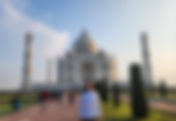
The Taj Mahal, which I recently visited As I write this presently, I have now been in India for one whole month. The halfway point of my time here has come, and lingered, graciously allowing me the moment I need to pause and reflect upon the experiences I've thus far garnered. This first month has been defined by big moments: My first field visit, a weekend trip to Agra to see the Taj Mahal, the successful implementation of a vitamin A program for children that I'd worked weeks to create and refine, the list goes on. These experiences have been fantastic, unforgettable, fulfilling---that is a simple fact. I would be remiss not to state, however, that I've found the smaller moments to have played just as pertinent a part in making my first month in India as incredible as it has been. It is these that I wish to write about today: The moments of genuineness, humanity, understanding, intrigue, marvelousness, and more. These simple scenes of wonder have transformed my time here, stretching hours to days and weeks to mere minutes. My time has flown, yet simultaneously stood still. The big moments seem to me to finish as soon as they begin, whereas for the smaller ones, time stretches like taffy. Below, alongside a photo, I attempt to magnify the many minute stories of my first month here in India. I hope you will find it interesting to see the bits and pieces of my life here that make me feel so at home. Without further ado, I present: My one-month minutiae. My first ride in an auto rickshaw, or "tuk-tuk" I remember my first auto ride rather vividly. Not only was the concept of a three-wheeled, green and yellow, compressed natural gas-powered, doorless, souped-up motorbike with a roof still incredibly foreign to me---I was also blown away by the fact that you could book one through Uber. While I can't remember the particular route or reason my friends and I had for taking one, I can recall with ease the calm it put me in to feel the breeze upon my sweaty skin. The confidence with which the driver passed vehicles and migrated through the maze of traffic perpetually present at any intersection assured me that I was in safe hands. It's nothing crazy, and it's nothing much, but to ride in an auto is to experience a certain sense of urban euphoria known only to those who have lived it. Flowers along my walk to breakfast at the S M Sehgal Foundation campus Loving my job goes beyond the work that I do. While I certainly find my project here at the S M Sehgal Foundation incredibly impactful, creating informative and interactive vitamin A sessions for children in rural areas, I've also found that a part of the joy I feel coming into the office each morning or heading out into the field stems from the campus itself. The flora (and fauna) I walk by on my way to work remind me to stop, be cognizant, and breathe. It's simply the smallest of nudges in the direction of serenity, and I'm always willing to stand on the receiving end of that. If I've had a stressful day in any way, these flowers are my reminder to, as The Eagles so eloquently put it, "Take It Easy." The street adjacent to the Sehgal Foundation (this is the least busy I've ever seen it) Going for a walk in one of the most densely populated areas of the world is an interesting hobby of mine that, I would like to think, has kept me in decent shape. Not only is there the simple exercise of actually moving my limbs, there's also the rush of attempting not to get run over by a car or auto or moto whenever the sidewalk tapers off, which is certainly an exercise for the heart. I like to go out in the evenings, whether that be accompanying my fellow interns to the gym about a kilometer or two away and finding a spot to sit and read nearby, or simply visiting the stalls that are just beside the Foundation on a road that runs parallel to the one pictured above. Especially after a long day of work in the office, I feel the need to get up and take a lap or two, burn off some calories, and earn those calories back in earnest by purchasing myself an ice cream confection of some sort from the man who sells them from his cart just beside the front gate. This revelry is explored further in the paragraph below. Different goodies I've purchased from the stalls and stands near the Foundation Whether it be fresh fruit, scalding spiced chai, or the best (and only) butterscotch ice cream I've ever eaten in my life, the stalls that lie adjacent to the Foundation have provided me with more than just sugar and nutrients: They've left me with lasting memories. At the beginning of my time here, I was honestly afraid to go out and try anything from these kinds of stores. I'd been warned about eating street food, was wary of the fact that I spoke very little Hindi, and so generally confined myself to a closed worldview in which these stalls didn't have much to offer. Boy, was I wrong. A few weeks in, one of my coworkers, a fellow intern who was from this area, asked if anyone wanted to come with him while he ordered a chai. I was more than willing. I'd seen him come back to our shared office space with all kinds of goodies, from coffee to candy, and I, truth be told, wanted in on that. I thought about all the foods I felt like I was missing out on. My meals at the Foundation had been (and still are) to die for, but in true American fashion, I felt I needed a bit of Indian junk food to really top it off. What my friend had been bringing back, I knew, would hit the spot. And so I went. We ordered chai, which was served in a clay cup, and sipped away to my heart's (and taste buds') content. My world has not been the same since. With other friends and coworkers and staff from the office, I've gone out now on many an occasion for ice cream, fruit juice, and more. Whenever I have a hankering for something sweet, I know just where to go. My Hindi has gotten better as an unintended, but extremely welcome, consequence of this interaction, as I can now roughly navigate myself through any one of these transactions without using too much of my English crutch. Murals painted on the wall of an underpass in Gurugram Whenever I have the chance to take a field visit, which, luckily enough for me, has been rather often as of late, I'm always astounded by the things I see just outside my window. I think about this often enough that I feel the topic will eventually coalesce into its own blog post, but for now, this is the credit it gets. Living in a city this big is a novel experience for me, and one that has taken a lot of adjustment to get used to. It's the urban artwork that always gets to me, though, and that even in the moments when I'm missing my rural roots, reminds me that things aren't better or worse here, they're just different. That difference is beautiful in my eyes, and I find no better way to exemplify it than the paintings, murals, and depictions I see all over the city. Whether it's figures from Hindu stories scrawled out in white on brick walls near Red Fort or flowers with a similar square footage to a small apartment plastered on an on-ramp to a highway leaving Delhi, the awe and comfort remain the same regardless of subject or medium. Put simply, I love the artistic scenery in and around my home here. Scenes from the Puja A few weeks back, an intern who lives around this area invited all of us from the U.S., a total of five at that time, to attend a Hindu ceremony, known as a Puja, which was being put on by their aunt. We dressed up in our best Indian wear and enjoyed that Friday morning together with all those celebrating Ratha Yatra from the surrounding community. It had been well over a year since I had experienced a Puja like this, and I felt refreshed to be reliving old memories, all while creating new ones. The small moments from this story I wish to convey come in the form of a mango, a rope, and an Indian lemonade. The rope came first, as, for this particular ceremony, a small chariot in which the deities sat was pulled along by those who had gathered to celebrate. I had initially begun by walking alongside this group, keeping a respectful distance, but I was soon called to come closer. There was dancing, singing, laughing, drums, the whole shebang, and there I was, right in the midst of it. My friend's aunt came over, joyful as could be, and wearing a smile that spread from here to Kolkata. She told me to grab on to the rope and quite literally danced away. I was more than happy to oblige, and the simple bliss of fully taking part in this Puja spread like wildfire through me. A little bit of that flame still lingers even as I write this. Next came the mango, which is a rather simple story. One of the children who had been busy directing the chariot and leading the singing of mantras, seeing that I was holding the rope, came over to me, reached into his satchel, handed me a mango, and went right on back to leading the whole community in worship. I had hardly gotten a "हरे कृष्ण" (Hare Krishna) out before he had gone on his way, and so I stood there, slowly walking forward in a state of awe at the events that had just transpired. I know it's just a mango, but it was a blessed mango, and so, to me at least, it meant more. I spent the rest of the day with a mango in my pocket, thinking fondly back to the two-second exchange that had led to its being there. As for the Indian lemonade, there was really nothing special there---just the fact that one of the other organizers of the Puja had seen our small troop of Sehgal interns, and offered one to each of us. It was hot that day, and my shirt was sticking to my chest before the sun had even peeked out from behind the clouds. I graciously accepted, and I honestly write about the incident now for no other reason than to say that that lemonade tasted terrific. A cow next to the road in Gurugram (L) Some buffalo in a rural village in the Nuh district where I've been working (R) Another small joy of my time here in India has been the never-far presence of bovine companions. Whether I'm in a market in Agra, the median of a road in Delhi, or a villager's backyard in the Nuh district of Haryana, these animals are everywhere. As with a few of the other tidbits I've written about in this blog, somehow, I derive a sense of serenity from this. Maybe it reminds me of home somehow, especially given the fact that this is the first time in my life that I've ever lived without animals to take care of or pets of some sort. All I can say for certain is that, whenever I see a cow or a buffalo here, it somehow makes me feel more at home. With the cows in particular, seeing them wander and roam freely is a spectacle of sorts for this Iowa farmboy, though a rather welcome one. A market in Delhi (L) A market in Agra (R) Going to the markets here is an experience worth far more than these few paragraphs will ever do justice. It's noisy, often crowded, and at times can be a little overstimulating for the faint of heart. I love it. Looking at all the shops selling jewelry, toys, spices, clothing, just about anything your heart desires, you can find somewhere in the maze of lanes. If you can't find what you're looking for, it may well find you, as a man with an armload of watches or a pocket full of airpods asks repeatedly if you'd like to buy anything. Being the only white person in the crowd certainly doesn't help my case when it comes to haggling with prices or politely turning down the watch and airpod hawkers from before, though I think it does add a certain something to the experience. The last time I visited a market, I was busy buying spices while my friends had moved on to another stall. I bought everything I needed to make spiced chai for the next year while I'd be in Iowa, and got to chatting with the store owner. Soon enough, we were sitting down drinking tea together, and laughing over shared stories. My friends made their way back, saw me lost in conversation, and I think the comment went something along the lines of, "We leave you alone for five minutes Isaac..." Those types of genuine interactions are what bind my experience here together. Whether it's with my fellow interns, project supervisors, or the new friends I make at the spice shop of a market in Delhi, the people-to-people connections I've forged will last a lifetime, in memory if nothing else. A monkey There's really not that much to say here. It's a monkey. I love monkeys. Little thing I love --> Therefore, makes the blog. :) A tree in Delhi (L) Reliefs on the Taj Mahal (C) A stone slab next to one of my reading spots (R) I hope that this blog has been able to open a window into my life by poking at the shutters one by one. These tiny details, like the floral reliefs on the Taj Mahal, may not be appreciated to their full extent from afar, but when viewed up close, can be inspected with the admiration they rightly deserve. I've fallen in love with so many aspects of my life here in India, so much so that I find myself snapping photos of random trees when I'm out and about in Delhi because I think they look cool. I am in awe of this place, and I can't believe it's already been my home for a whole month. In much the same manner as, even when cloudy, the stones here hold on to and slowly radiate the heat they've picked up from whatever time they've spent under the sun, I too feel the sun overhead. I know that my time here will be an experience I hold close for years to come, and as I tell the small stories like these that I've picked up, I know I'll feel that warmth radiating again. So, with all that said, here's to the most marvelous first month I could ever imagine, and an even more incredible month two ahead. Thanks for reading, -Isaac Vosburg :)
- Weekend Wonders
A view of the markets just to the east of Jama Masjid (seen at a distance) Throughout my three weekends here in India, I've had the chance to do and visit some incredible things. To be honest, though, this weekend's wanderings in particular blow everything else away. I'll explain why exactly that is through snippets of thoughts tucked between my many photos: A side gate at Red Fort, Old Delhi Seeing architecture that's been around longer than your country evokes a certain sense of awe, beyond even the ornate and imposing beauty of such structures. It's a sense of wonder that transcends centuries of human history, conflicts, wars, kingdoms, colonists, and governments gone by. Put simply, it's breathtaking for a multitude of reasons. Red Fort and some new friends It's one thing to take a picture of a place, it's another to ask someone to take a picture of you at said place, and it's yet another for someone else to ask you if they can take a picture with you because you, a blond-haired and blue-eyed white guy, happen to be at that place. All of the above happened in excess throughout this weekend's architectural excursions. The latter was a commonplace enough occurrence that my fellow interns suggested I start charging by the photo. I think I would've made a decent commission that day had that been the case. I'm glad to have met so many passing strangers, fast turned to friends :) Scenes from inside the fort Grand halls filled with merchants peddling their wares to passersby, stunning arches in all directions, and intricacies far more than the eye can see: These are the sights contained within the expansive Red Fort of Old Delhi. You know that this fort is really something when you walk in, explore structure after structure, and forget entirely that you are still contained within its great walls. The Naubat Khana and Diwan-i-Khas, located within Red Fort Maybe it was the sunlight, maybe it was the marble, maybe it was the fact that I was standing where the seat of the Mughal Empire once stood---whatever the case, I was thoroughly and completely enamored. I soaked in all the sights I could, and thought back to the time when princes once roamed these very same courtyards. History surrounded me, and happily allowed it to engulf my imagination. Red Fort as we left and Jama Masjid as we arrived Saying goodbye to such a wonderous place---Red Fort, that is---I wondered what possible grandeur could top or even match that. To my surprise, the streets of Old Delhi held within them a magic of their own which certainly provided complement, as well as contrast. This was the human side of history, the part that is alive and breathing, where, among the rickshaws, motos, and small cars, one can still spot an ox-drawn cart making its way down Old Delhi's interlacing lanes. Jama Masjid from the central courtyard Watching as the evening drew long, the sun sank low, and the lights of the Mosque flicked on. Hearing the call to prayer for the first time in over a year. Feeling the radiant warmth of the red stone tiles upon the soles of my bare feet. Saturday evening soon became Saturday night, and my friends and I were on the train back home. Notable sights en route to Qutub Minar Sunday's expedition included another train ride, this time to Qutub Minar. My friends and I walked the twenty or so minutes from the station to the breathtaking and storied complex. Maps were hardly necessary, as the tallest stone tower in India is relatively hard to miss, even from a distance. Qutub Minar The details are intricate, the stonework immaculate, the sight itself? Worth all the storage space left in my phone. Something tells me this caption should be inSPIRE-ing... I stopped to read what Arabic I could from the bits of the Quran inscribed upon the minaret. I was amazed by the detail and the craftsmanship that simply stood, stretching skyward, before my eyes. When this was built, I'd like to imagine that the laborers on the uppermost levels thought themselves scraping the roof of the very heavens. More sights from the Qutub Minar Complex What amazed me when I first took stock of my surroundings, and what continues to amaze me about this site now, is that all these centuries ago, it wasn't simply enough to construct a Mosque or a Temple or, frankly, any structure that has survived this long. No, it wasn't enough to build it and call it a day: Every single pole had to be meticulously crafted, carved like soap, from stone . Each block, brick, and column was set in place not just for stability, but for suitability to a set of standards we humans in the 21st century may never live up to. A view from the central courtyard This weekend's wonders took my breath away. I'm grateful to have visited such extraordinary works of collective human effort, designed to outlive and outlast the test of time. As I reflect upon my experiences, all I am left with is this: India, you amaze me. My friends (fellow interns) and I
- Badarpur: The Best 9:00 to 5:00 I Could Ever Ask For (Field Visit, Part II)
Some of the children we worked with during my first field visit in Badarpur ----------------------------------------------- A note from the author (that's me, hi!) before we begin: If you're coming here after reading my part one, great! Thank you for making it through the fifteen-hundred-word stream of consciousness that was supposed to eventually become this very story. If you're coming here without having read the prior post, not to worry! It is most certainly not a prerequisite, though there is a bit of catching up for you to do. Allow me to summarize my entire last post: My supervisor (Aparna) and I, along with two other interns (Maya and Hataishi), drove from Gurugram to the village of Badarpur, located in a much more rural part of our same state of Haryana. That's it, that's all, and so, without further ado, I present to you, the rest of my story. ----------------------------------------------- As we all exited the vehicle, the warm Indian air enveloped us. Though it was cooler today, thanks to the grey skies and a blanketed sun, it was still in the upper 90s Fahrenheit. I gathered my things: a small notebook, a pen from the World Food Prize, and my Lifestraw water bottle, then gently closed my door. I was in awe. The first immediate sight I had seen, and the only picture I took on my own camera while in this village, was of the pool. There were children splashing around, as well as cattle and goats being washed. I had never seen anything like it. As I got out of the car and absorbed my new surroundings, this image set the tone for me in a way I can't fully describe. I felt at peace, comfortable, and that I had finally made it to an area of the world that I had only ever dreamed of working in prior. I was at home here. The aforementioned photo of the pool in Badarpur We were met by a Sehgal Foundation field officer, a teacher who had been working with the Foundation since its inception in 1999. Following her lead, we were then led to a classroom area in a nearby building. Mothers and young children, from what looked to be, respectively, ages 20 to 50 and 1 to 10, gathered in the yard out front. Our small Sehgal Foundation delegation all kicked off our shoes outside the classroom door, and upon entering, began to prepare the space for today's activities. The room was plastered with posters from government, health, and philanthropic initiatives, so we found a nail to hang our large flipchart from with relative ease. Aparna and I discussed the questions we had developed, and we each got to work further preparing our materials. The aim of today's visit was to develop a baseline understanding of this community's needs, their dietary habits, and the best ways to approach providing them with useful information about vitamin A and overall eye health. For the caregivers in particular, it was important to understand where they most often procured food for their families, how seasonal changes affected food availability, and what a typical day's set of meals looked like, among other things, such as whether or not their children had ever exhibited signs of vitamin A deficiency like night blindness or skin issues around the eye. Our group from Sehgal and the mothers, at the start of our session As the mothers came into the room and took a seat, our baseline questioning began. We started, of course, with an introduction, and then moved on to questions specifically pertaining to vitamin A. With answers recorded, we then turned to the flipchart, asking mothers what foods they had eaten for breakfast, lunch, and dinner most recently. I helped to divide the flipchart, but because of my minimal experience with Hindi (I can read and write it, though I don't have a solid grasp on the language and vocabulary itself---an issue I've aimed to surmount by the end of my stay here), I stepped aside so that Aparna could more accurately and efficiently record the mothers' answers. Now that I was no longer standing at the front of the room, I decided to take some notes of my own. I jotted down my quick thoughts about how colorful the clothes were, about the goats that were just outside the window, about the kids that sat with their mothers or played together in the yard, about the pieces of cardboard that were passed around as fans to ward off the settling heat and still air. We continued along, prompting discussion and making our way through each of the planned questions. As our final activity, we split the mothers into smaller groups and had each one write down their children's favorite foods and snacks on a piece of poster paper. Following this, we finished our session with a whole group discussion over what each subgroup had written down, ultimately rounding out the morning and our time with the mothers. Left: Mothers writing answers to our prompts - Right: Aparna and I introducing ourselves and the day's goals Following this, we moved to a separate space, driving around the pool to get to the other side of the village. We hopped out once more and, greeted by a group of youngsters, walked along the path between buildings to our next session. We were in an open-air porch of sorts with a concrete floor, adjoined to a building which had electricity, unlike the one we were just in. That meant there was an electric fan blowing at the back of the room, which worked wonders in circulating the air and keeping the space from feeling hot and stuffy. A mat was rolled out for the children to sit on, and Aparna and I, as well as the others from the Foundation, worked to set up this space as well. There were 30 or so children that had shown up, boys and girls, most of whom were between 6 and 12 in age. They were an incredibly well-behaved bunch who, after hearing Aparna explain directions in Hindi, took a seat and made room for all their friends. This is where my day began to turn unforgettable, as minuscule event after event transpired and stuck like velcro to my heart. It had already been a memorable morning, what with a journey worth an essay over, sights like I had never seen, and an entire session based around questions I had helped to develop, and yet, working with these children struck a new key. Aparna and I giving instructions for an activity We began by introducing ourselves once more, and unlike the earlier time, when I had been introduced by someone else, I took it upon myself to utilize what little Hindi I could command, and at least say my name. "मेरा नाम इसहाक है" "Mera naam Isaac hai" It's a simple phrase, and really the smallest of things to memorize, and yet, it lit up many of the children's faces to see me at least attempt an introduction in Hindi. I followed up by answering the question of "what is your favorite food?" which we had tagged on to everyone's introductions. My response of "पानी पूरी" "pani puri" made those smiles even wider. To preface, the night before, I had been out at the market with some of my other intern friends, and we had eaten pani puri. It's a type of bite-sized and deep-fried hollow bread, which is usually stuffed with potatoes and spices and oily goodness. It, along with many of its similarly delectable Indian street food companions, is far from healthy---a fact that would soon come to bite me in the butt. With the facilitators' introductions complete, we turned next to the children. Each kid took turns standing up, stating their name, age, and favorite food, and sitting back down as their nearby peers soon started this process over again. In my first, and only, act of skewing the day's data, it turned out that pani puri became far and away the most common answer to our question of "what is your favorite food?" Sitting with the kids as we listened to a group present their daily foods Our first real activity with the kids was similar to the last we had done with the mothers. We split the children into three groups, each of which came up with one food for breakfast, lunch, and dinner from every member. They thought carefully about which foods they would most commonly eat, and made sure that no two group members' answers overlapped. Each group chose three of their members to present at the front of the room, and it was so much fun to see these kids so engaged in an activity that I knew would come around to directly benefit them. By learning about the diets and eating habits of this community, our aim is to find the places where vitamin A-rich foods can best be incorporated into said diets, staving off this all-too-common micronutrient deficiency. Anywhere from 250,000 to 500,000 children go blind every year due to vitamin A deficiency, or VAD, and thanks to these shocking statistics, it is no surprise that VAD is the leading cause of preventable blindness in children worldwide. Again, to see these kids so happy, active, and interested in the activities I helped to plan meant, and still means, the world to me. After each group had presented, Aparna and I put together a quick eye health survey of sorts, creating a makeshift "letters on the wall at the optometrist's office" type of activity on a piece of flipchart paper. We wrote two lines of letters from the English alphabet (all of these children had learned these letters in school), and made sure that each individual letter started out large and grew smaller as the line progressed. Our makeshift vision test Each of the kids passed with flying colors, and rather enjoyed the challenge of calling out the letters as we randomly selected them from the lines. If you can't tell by the ear-to-ear smile on my face in all of these photos, I, too, was having a blast. We talked next about the importance of eye health, and got a gauge on what these kids' favorite snacks were by starting a group discussion. While getting answers to our baseline questions was critical, it was also important to simply create a bond with these children and this community at large. In a fitting tribute to this last point, we finished our session with a game of four corners. Four corners must not be a popular, or even existent, game in India, as it took a whole lot of explaining before the rules were clear to the entire group. Nonetheless, with a language barrier overcome through translation, the game eventually got off to a start. The children's teacher, sitting down in the middle, would call out "एक, दो, तीन, चार" "ek, do, teen, chaar," that is, one, two, three, or four, and each of the kids in the stated corner would go to the middle and sit, as they were now out. I lasted a whole two rounds (I went from corner one to two, and two to four) before I was called out in corner four. The kids all laughed and smiled as I sat down with them in the center, surprised that I had gotten out so early. As the rounds played on, the kids grew more and more invested, and ultimately, a winner was crowned. Following this, we regrouped and recapped everything we had gone over during the session. The children shared again what they had learned, and said they were excited for our next visit. Photos taken during the children's session Though the official session had ended, and the majority of kids had said goodbye and gone back to their homes, there were a select number that stuck around. We all sat down in a group, and we exchanged questions back and forth. I asked some questions pertinent to my research and my project, like what their favorite activities were, what they enjoyed the most today, and if they had ever had troubles with their eyes, but I soon found myself asking what their favorite animals were, and recording their answers just for fun. In following this conversation, I had mentioned my many pets back in Iowa, after which I was asked to list them all. I broke it down species by species, and the kids would read out the names of my pets as I wrote them. Despite the fact that they could read my language and I could read theirs, neither of us could speak the other's very well. Laughter dismantled the language barrier brick by brick, and soon enough, we were all smiling and laughing at every little action. Writing a census of my pets The laid-back afternoon passed like the so-called "rubber time" here in South (and Southeast) Asia is known to, with all sorts of activities and conversation flowing slowly from one to another. Thanks to Hataishi, who was fluent in Hindi, we were able to communicate rather well once she came around. The village girls brought over some henna, which is called "मेंहदी" "menhadee" here, and they drew beautiful temporary tattoos on each of us interns' hands. The boys gathered around me, and we swapped stories and more questions together. Everyone excitedly signed my notebook, and after the afternoon had stretched by, it was time to leave. Some photos from the afternoon As we got up to leave, one of my new friends asked, "Do you eat?" I said yes, and he told me to wait. He ran to his house, which was just down the alley, and came back with a plastic-packaged Indian snack. He told me to keep it and enjoy, and so I brought it along with my water bottle and notebook. At this point, we had picked up all of the posters, markers, and materials and were making our way to the car. One of my other friends dug through his pockets, found a one-rupee coin, and gave it to me, saying it was lucky. I tried to refuse, but he was insistent. He placed the coin in my hand with all of my other belongings. As we made our way to the car, parked a good fifty feet down the road, I kept finding myself turning around to wave goodbye. The children had all gathered outside the street entrance of the building we had just been in, and each time I turned around to wave, they returned the gesture 10-fold. I was sad to leave, especially after we had just made such a solid and wholehearted connection. As I climbed into the car once more, these thoughts weighed on me. I looked down at my hands, one tattooed with my name and hearts, the other full of small gifts and a notebook keeping record of all the day's fun memories. It was a bittersweet end to one of the most fulfilling days of my life, and right as my mind began to drift toward reflection, there was a knock at my window. One of the other boys was standing there, reaching up to the windowsill with something in his hand. I rolled down my window, smiled, and said hi, and he gave the small item to me. It was a glass vial of hand perfume he had shared with his friends and me during the afternoon, and he asked me to please take it. The sentimental value of all these little gifts nearly overwhelmed me in that moment, but I managed to hold it together as I told my friend "धन्यवाद" "dhanyavaad" to express my heartfelt gratitude and thanks. I waved once more as we drove away, keenly aware of my already growing desire to return. I rolled up my window, took a look at everything in my lap, and allowed myself to savor that moment. Precious memories In part one of this blog, I stated that: "Whenever I am in a country unfamiliar to me, or even one that I've come to know for months on end, I never sleep while in transit. I make it a point to stay awake, to watch the road signs and the scenery, and to see how the landscape and development change as you drive (or ride, in the case of trains) along this foreign land." I broke that rule on the way back to Gurugram and slept for nearly the whole hour-long drive. I'm sure glad I did, because I don't know that my heart would have been able to handle leaving Badarpur and my new friends there any other way.
- The Road to Rural Haryana (Field Visit, Part I)
A street on the edge of a village in the north Indian state of Haryana Where do I even begin... Well, at the beginning, I suppose. I woke up on the morning of Monday, June 16th, as per usual for my life here in India. That means at a little after 6:00 AM, my circadian rhythms start chirping away in Hindi and I'm awake, alarm or not. I did a little reading, a little Duolingo, a little catching up on news from the U.S. and from family and friends. I washed up, showered, shaved, and somehow whittled the time away until 8:30 came around. Unlike usual, all I brought with me from my flat-let today was my water bottle and my notebook---my computer stayed set at my desk. I also put on Elmo socks and close-toed shoes for the first time since my arrival in India 10 days prior. Today was my first field visit, the first time I'd get to see the work I'd been doing in the office the entire week before be put into action, the first time I'd get to see the lives of those I was working to improve from their own perspective, the first time I'd get to see what this entire internship is truly about. Breakfast was phenomenal, as per usual, and after eating with all my friends, I filled up my water bottle from the spigot and made my way to the front office. I waited there with Maya and Hitaishi, two of the other interns who would be accompanying my supervisor and I today. Soon enough, my supervisor, Aparna, had gathered all of the materials we would need for the day, and we loaded into the car. As we pulled out of the Foundation's driveway and wove our way to the highway, we were all encouraged to take a nap if we felt so inclined. According to the driver, it would be about an hour before we arrived in the village. A town we drove by while passing under a bridge Whenever I am in a country unfamiliar to me, or even one that I've come to know for months on end, I never sleep while in transit. I make it a point to stay awake, to watch the road signs and the scenery, and to see how the landscape and development change as you drive (or ride, in the case of trains) along this foreign land. I wrote down a number of my observations in my notebook as I stared out the passenger's side rear window of this silver Suzuki (it's the opposite side of what you're likely thinking---you can thank the Brits for that one). I've embellished each with a few of the details I hadn't the initiative to jot down at the time, but otherwise these are my honest thoughts as they occurred in the first moments I spent truly outside of the urban sprawl here in India: The steel of the city has now faded to bricks. This is the emptiest road I have been on in India. The transliteration (for example, taking "राजमार्ग" to "raajamaarg," meaning highway in Hindi) has lost its prevalence the farther we travel. Almost everything is written in its natural Hindi script. There are small markets and stalls popping up along the roadside, selling bananas, mangoes, and all sorts of fresh tropical produce. The cows are everywhere now. After the city, with its row of buildings upon buildings, the expansive fields I set my sights upon presently provide a much-needed rest for the overstimulated eye. Despite the fog and the mist and the greyness of the day, I can see clearly that there are people working in many of these fields, men and women alike. The clothing has become more traditional, head scarves are becoming more prevalent, as are Mosques. There's a goat farm. There are still massive power lines in the distance, running from metropolitan area to metropolitan area, criss-crossing the rural swathes between. There are so many Pepsi ads---plastered to storefronts, painted on building sides, sprayed onto navy sheet metal. Coca-Cola's here in spades, too. We've stopped. As it turns out, we'd arrived at the Sehgal Foundation's field office for this region, from which we had to grab some supplies. As Aparna called the office, we waited for a while on the side of the road there, during which time I found a passing sort of entertainment in watching the occurrences taking place just outside my door. A country path to the nearby fields, with powerlines and mountains in the far distance Immediately to the left of me were four boys, ages ranging from about 12 to 20 years old. They were working together to take apart a bit of a broken grill from a car that had likely been in an accident. There was one piece of metal that would not budge, despite the fact that each of the boys had taken their turn with the hammer. One of the boys retreated to the body shop, whose project I imagine this car was, and reemerged with a new tool: A metal pincers of sorts. Still, the metal would not budge. Each boy took a turn with each different tool, and still more tools were brought out as the battle was waged on. As I sat there, I contemplated what life events had been so drastically different that they and I would be in this same place, at roughly the same age, for entirely different reasons and with entirely different backgrounds. The biggest factor had been something out of all of our control, the simple matter of where we were born. That fact settled unshapenly in my gut. I never did get to see what became of the boys or their objective to remove the broken front bumper of that car. Pretty soon the one I was inside began to roll backwards as the driver better adjusted ourselves to be clear of the flow of traffic and closer to the field office, which we had apparently driven a tad too far past. We sat for a while there before I noticed another group that caught my attention. On the side of the road just ahead of us, there were two young boys. They couldn't have been over five and ten years old, respectively. They were dressed in their Mosque clothes, with long silk-like shirts that went down to their thighs, and pants that matched exactly in shade and material. They wore sandals and a taqiyah, or topi, as well: a traditional cap that many Muslim men wear to pray. They held hands tightly as they crossed the road in front of us, waiting for the rickshaws, motos, big trucks, and cars to all pass before they made their move. In my mind, the two must have been brothers, and again my thoughts wandered. What circumstances had led these two to be so close, while my siblings and I are all thousands of miles apart? How does their relationship differ from the one I know with my younger brother? I hadn't much time to ponder those questions, as soon the materials we needed were hand-delivered to our car by one of the field office staff. We thanked them, and were off again with a flip chart, poster paper, and markers now in hand. Cows and goats grazing were a common sight as we traveled As our four-lane divided highway dwindled to a two-lane road, I noticed that more and more of the young kids I saw were running around shirtless, or even naked, while many of the old uncles sat and smoked and played cards and laughed while keeping a loose eye on the little ones out and about. As that two-lane road became a single paved path with no markings and hardly the space for a single American pickup in width, we had to wait for cattle to cross much more often as they wandered and grazed, or were encouraged along by locals. As our one-lane paved path turned to laid brick as we entered the edge of the village, I noticed electric wires like high-tensile strung up by sticks, not power lines. As the laid brick turned to dirt, I saw women carrying jugs of water on their heads to and from the nearby well, children splashing in the pool at the center of the village, having fun with friends or washing their cows and goats. As the dirt road became impassable, I saw a small building to my left with mothers and children all gathered around. We had arrived. ----------------------------------- INTERMISSION: I pause now to thank you for making it this far in my story. I realize that my points have been long and rambling, and so I'm thankful for your time and attention. The rest of this day, the real substance of the story, will be coming in a part two sometime soon. Thank you again for reading my thoughts on the road to rural Haryana, and I hope you'll stick around for the second (more important) half of this tale! ----------------------------------- To be continued...
- Vitamin A-mazing: My First Week in 1500 Words
Part of the S M Sehgal Foundation campus (the building to the left), taken from the vantage of my favorite reading spot under a palm tree in the central courtyard If you'd have asked me a week ago what vitamin A was good for, I probably would have stumbled at the question. Now, I'm researching how best to incorporate it into rural children's diets here in India. What a wild and unpredictable world this is. My first week at the S M Sehgal Foundation has been marked by many new experiences, from my first ride in an auto rickshaw or "auto," to attending my first real job that isn't manual labor. All these "firsts" have left me in a state of wonder, and I've been pleasantly surprised by so much already. Knowing myself, to talk about my week as a whole would be scatterbrained, filled with tangents, and hard to follow. In the coming paragraphs, I'll do my best to keep on track by presenting just one topic at a time. Here goes: The Job For the first time in my life, I am now working a legitimate 9:00 to 5:00, and I could not love it more. As stated, the project I'm assigned to is a current food and nutrition initiative of the Foundation aimed at increasing awareness of vitamin A within rural villages and promoting diets that contain sufficient amounts of the micronutrient. My role, in particular, is in the development of information, education, and communication, or IEC, materials, as well as the design of interactive activities to best pass on this information to caregivers and children alike in an engaging and effective manner. What that means for my day-to-day is that, while no two days are alike, I can typically expect to be working at my computer in the interns' office in some capacity. I may be brainstorming, researching, or penciling out plans for field visits, all of which excite me, but quite honestly, the thing I can't wait for is tomorrow: my first visit to the villages where this initiative will be implemented. Over the past week, I've been working to develop some baseline questions to ask the villagers---caregivers and kids both---which will grant our project team a better understanding of the situation on the ground in these communities. What does the food system look like, how accessible are vitamin A-rich foods, what is the typical diet and how has that changed over time, etc. etc. Without getting too incredibly into the weeds, all I can say is that I absolutely love my project, and I cannot wait to implement our ideas and solutions in the field through the education and participation of locals. Working with communities like these is my dream job. Left: A small lizard beneath the S M Sehgal Foundation's inaugural plaque outside the main office Right: Me next to my favorite reading tree, Foundation buildings in the background The People Though it's only been one week, I've already made a ton of friends. There are four other international interns, many from different parts of the U.S., whom I've rather enjoyed sharing my office space and weekends with. There are interns from India I eat lunch with, where we've shared stories on a daily basis and birthday brownies on special occasions (or rather, occasion, singular). Then there's my project supervisors, all of whom have been incredibly receptive and welcoming to me as they've brought me under their wing to learn the work of this Foundation and how best I can support it. I'd be remiss, as well, not to mention the Sehgal grounds staff here. They are some of the kindest, most wholesome, and helpful individuals I have ever met, and they're also the ones to bring joy to my day-to-day life through the next section: The Food Where do I even begin? Whether I'm out and about in Gurugram with the other interns or just staying at the Foundation for a meal, the food is to die for . I have loved every single dish I have tried or been served here, and that is not a lie. It's certainly interesting to be eating authentic north Indian food for the first time, what with most of the Indians in Malaysia being from the southern states and bringing their food customs along with them. Roti canai, idli, dosas, and more were all commonplace during my year there, so to be eating chapati, chole bhature, palak paneer, and the like is definitely a notable shift. Regardless, I have found the food here well-suited to my taste buds, and I won't be surprised if I come back from this internship with a five to ten-pound reminder of that. Top row: Two breakfasts served at the Foundation cafeteria Bottom row: Two lunches served at the Foundation cafeteria Chole bhature, a signature dish of Delhi, I tried while out at the mall with my friends The Climate As I write this, it is currently 35 degrees Celsius (95 degrees Fahrenheit), with a feels-like temperature of 40 (104)... that feels lovely. This past week, legitimate highs have reached 44 degrees Celsius (111.2 degrees Fahrenheit), and the heat has been stifling in nearby Delhi. Despite this, I have found myself among a minority that wholeheartedly enjoys such a climate. This past week, on many an occasion, I've plopped down beneath one of the palm trees in the courtyard to read for an hour or more on end under the sun. The way the weather smothers you feels almost like a blanket to me, and for whatever reason, I find that feeling rather comforting. I've gone for long walks returning from outings with my fellow interns, and even then, I find the climate here totally and completely comfortable. Stay tuned to see how Iowa's fall and winter treat me at Grinnell. The Culture Though I'm nowhere near as immersed in India's culture as I was in Malaysia's during my exchange year, I've still found numerous ways in which to live and learn according to the customs and traditions of my new residence here. Some things are simply a reiteration of points I picked up on while living with my Indian host family, while others are entirely novel. In any case, I've happily reverted to abandoning my socks and shoes once more, opting rather for sandals as the footwear of choice, and I eat almost every meal with my hands (though of course not the left one, as that is considered impolite). I've been picking up on bits of Hindi here and there---my focus for the coming week is to spend at least 30 minutes to an hour each day devoted to the language---and my response to most questions has largely ended in "ठीक है - theek hai," meaning "okay," followed by the typical side-to-side head nod. I've been surprised by both the similarities and contrasts between India and Malaysia, though I can confidently assess that my experience learning the cultural ins and outs of the latter has certainly helped me feel at home already in the former. No shoes, no socks, no problems The Experience Not only have I gained stories I'll someday share with my grandchildren, like riding in autos down the streets of Gurugram or walking past friendly cows in the median as I come home from the mall with my friends, I've also gained experiences of my own here, to be held by me alone. This is the first time I've been truly and extensively living by myself, without a family to look after me. It's interesting to me, the amount of learning that's happened more in the vein of time management and self-responsibility than anything else. In any case, I'm glad to be soaking in all kinds of newfound knowledge, in whatever facet(s) they may pertain to me. I have truly loved every moment of my time here in India, and though I'm only one week in, I can say with certainty that this place, these people, and my work here at this Foundation, have all held in their own way, a small, but notable part of this already lifechanging experience. Top left: An auto ride at night - Top right: One of the aforementioned friendly cows in the median Bottom left: A view down the street on which the Sehgal Foundation is located - Bottom right: Some of my fun work! It is with full confidence that I also state that the best is yet to come. Please stay tuned for more updates throughout the coming week, and thank you for your time in reading this. Have a great day! -Isaac :) P.S. This smile has been pretty much incessant since arriving! (Representing Iowa through my choice of shirt)
- Hauz-Khas and My First Day in India
Hauz-Khas Ruins, a storied set of stone structures that have stood the test of time I landed at Indira Gandhi International Airport at 5:19 AM on Saturday, June 7th. After over 36 and a half hours of traveling, I had made it. I gathered my belongings, got off the plane, went through immigration, met Italian Santa Claus, found my checked luggage, and exited the airport. That's a lot of steps all rolled up in there, so why don't I break down each one before moving on. Gathering my belongings: This was easy enough, as my carry-on had been checked all the way back in Des Moines, so all I had to grab was my backpack and a good attitude! Getting off the plane: We had to wait a little while, but once everything was set at the gate, I was off the plane and on into the last airport of my journey halfway around the world. Going through immigration: After getting some help, I was directed to the right line, and made it through immigration without a hitch. I had memorized and recited my address and emergency contact information on the plane ride here, but luckily, my visa and proof of identity were all they needed. With my passport now stamped, I was soon to be off into India proper. Meeting Italian Santa Claus: While in line at immigration, and older gentleman came up to me and asked if this was the right line. We talked about which kind of visas we each had, where we were coming from, what brought us each to India, and throughout that conversation, I couldn't help but notice the man's long white beard, his small spectacles, and the red cap he wore. After mentioning that I had come on a student visa, he said that he, too, had initially come to India to study---though it had been many decades ago. He knew exactly where the city I would be staying in was, told me all about his experiences here in India, and then we parted ways as we were each called up to the Immigration Officer's booth in turn. I don't know if I'll ever see that man again, but I'm glad to have met him. Finding my checked luggage: As I made my way to Baggage Claim 8, the words being spoken around me began to set in. No longer was English the lingua franka, but rather it was Hindi. I recognized a few things from my many nights of Duolingo lessons, but in that moment, I realized how out of my depth I truly was. I'd dipped a toe in, sure, but there was so much more to learn---so much more I hope to learn during my time here. As those thoughts sank in, I watched and waited for my navy bags to come around. I'd tagged each one, so they were very clearly mine. My checked bag was first, followed soon after by my carry-on. With bags in hand, I headed toward the exit sign. Exiting the airport: On my way out, I stopped to exchange some currency, and with rupees soon in hand, I pressed on toward the exit. As I stepped out of the airport, the warm Indian air wrapped me like a blanket. The heat and humidity felt just as they had in Malaysia nearly two years prior, and I thought to myself, "I'm back." As I drank in my first few moments under the Indian sun, I found Arjun---one of the Sehgal Foundation employees---holding a sign for "Isaac Thomas Vosburg." I made my way over to him with the biggest smile on my face. We chatted as we walked together back to the car, where I was pleasantly surprised by the fact that the steering wheel was, once more, on the right side of the vehicle. We loaded my bags and took off. Though it was only 6:00 something in the morning, the sun had well risen by this point, dampened only by a bit of smog. Arjun told me stories, and I shared with him mine. He talked of his family and Indian weather; I talked of experiences in Malaysia and my family in the U.S. We laughed as we made our way to Gurugram, and I was genuinely impressed with the driving. It seems that the lines on the road are merely suggestions, and that most drivers are able to use their horns as a form of echolocation, ensuring that the cars, three-wheeled autos, and traffic-cutting motos alike knew where they were in relation to one another. It's genuinely an experience worth more than a paragraph in and of itself, for I loved each and every moment of it. Arjun told me how, despite the fact that traffic behaves in the manner it does here, there are far fewer accidents than in the U.S., and we concluded that that was largely because people pay closer attention to the roads here, because you can't take your eye off of them for a moment. Soon enough, we had arrived at the Sehgal Foundation campus, and I was shown to my room. Arjun told me to get unpacked and settled as needed, and that breakfast would be served as soon as I came back down. I took a moment to look around and began to unpack my bags. My room was nice, a bit bigger than a dorm room, with my own bed, study table, bookshelf, closet, bathroom, and more. I got unpacked easily, for I had traveled especially light, considering the fact that I wanted to take much more home with me than what I had left with. I showered, freshened up, changed clothes, took my malaria medication, and went downstairs for breakfast. As I made my way to the cafeteria, leaving the building which housed all of us international interns (there are five of us total, and you'll be introduced to the rest of them shortly), the warm air enveloped me once more. I don't know how else to express it, but that feeling always brings a certain comfort to me, and this time was no exception. The sun had risen further in the sky, more of the smog had dissipated, and the birds chirped from their perches among the trees that encircled the campus. I entered the cafeteria with the biggest smile on my face, and exited with a frown and watery eyes. A preface, before this next section: As it turns out, my malaria medication is definitely not best to be taken on an empty stomach, as I had that morning, despite what the label may say. Isaac from the future is currently writing this statement, and hindsight is 20/20 when it comes to what happened next. Breakfast was excellent. I met Ram, who was the caretaker for all of the interns and the cook for all of the staff here at the Sehgal Foundation. That morning, he had made some eggs with toast for me, and had prepared them special, considering that breakfast for the other interns wouldn't be served for another hour or so. I sat down, ate my fill, and all of a sudden, my stomach was tying itself in knots. I ran outside, found a nice empty space between the bushes, and emptied the contents of my stomach right there. As I walked back inside, Ram asked me if I was alright and showed me to the restroom so that I could wash up. I made my way back to the table, and seeing as my stomach had settled, I finished my plate. As I finished off my tea, the same feeling washed over me again. I rushed to the bathroom and threw up once more. I cleaned up again, came back to the table to gather my things, and genuinely felt terrible. My digestive tract had stopped doing flips at this point, it was rather the matter of the implications of not eating my food that bugged me. Ram had made me that meal special, and in the traditional customs I had picked up from my Indian host family in Malaysia, the least I could do to show that I appreciated the effort Ram had put into preparing the meal for me was to clear my plate. I suppose I did end up doing that, but it certainly wasn't in the way I had imagined or wished. (It took me another day to figure out that it was the malaria medication that was making me sick in the mornings, but luckily I have it all worked out now.) Ram took care of me and made sure that I got back to my room alright. He told me to rest for a while, and so I did. I caught up on some much-needed sleep, for in my aforementioned 36 and a half hours of travel, I had dozed off for maybe five or so odd hours on my two international flights combined. I woke up at around eleven feeling rather refreshed. I drank some water, finished unpacking, read, and worked on some odds and ends before heading down for lunch at 12:30. There, I met the other interns: Morgan, Maya, Smeera, and Suchita. All of them were extremely welcoming to me, and each had been at the Foundation for varying amounts of time before me, from one week to nearly a month. As we ate lunch together, we all formulated a plan to go out for the evening. Thanks to my nap, I wasn't feeling too jet-lagged, and decided to tag along. I got to know everyone a bit better as we exited the compound, hopped on the metro, and headed closer to Delhi. The streets were packed with cars, autos, and motos, and the metro station was packed with people. As my first time truly out and about in India, it was eye-opening for me as I saw how life operated differently here---I kept comparing and contrasting to my life in Malaysia, but soon enough found myself making a mental note not to, and to let India take up its own residence in my mind, apart from past experiences. In doing so, I became inundated with new perspective, and I sit here presently glad of that executive decision. As we exited the metro and walked up the stairs to the street above, I realized that I was in for another treat: an auto ride. Suchita had gone on to meet a friend, which left our group with four. Each auto generally has room for two passengers unless you cram, so we talked to two drivers, expressed our destination, and were off. An auto is an interesting vehicle. Three-wheeled, green and yellow, open-air with a covered top, these guys are the London black cabs of India. In my three days here, I've ridden in one three times, and I've loved every moment of it. It is genuinely an experience worth more than a few sentences of mention, and Uber here even lets you hail one. Maybe one of these days I'll devote a whole blog post to "forms of Indian transportation." With my first traffic-cutting, lane swerving, yet somehow incredibly safe auto experience now behind me, we had arrived at our destination: Hauz-Khas. The thing that had initially drawn us here was a thrift shop the girls had found online. We stopped in, shopped for a bit, and left, after which we went to an old book and map store nearby. As we descended the stone steps into the cool, yet musty lower level, the smell of yellowing paper filled our nostrils. For me, this was heaven. I love books, I love maps, and I especially love them when they've reached a state of antiquity. I'm a sucker for a good classic, and the globe I keep under my lamp in my room in Iowa dates back to the early 1930s. Needless to say, I could have spent years in that store. As the afternoon wore on, we had examined a vast portion of this auntie's collection, and with a few great finds in hand, we made our way back to the street above. It was here that we split, Maya and I wishing to visit the Haus-Khas ruins just down the road, and Morgan and Smeera wanting to explore further and stop by a coffee shop. We parted ways, intent on meeting up again in an hour or two. Getting into the actual Haus-Khas complex was about as straightforward as a lane change in the auto from earlier: At first, it seemed easy enough, but upon closer inspection, it was a lot more complicated than initially perceived to be. Using a QR code designated by the Indian Government, Maya and I attempted, and failed, numerous times, to purchase our tickets. Online payment was the only option, and while my end refused to load, Maya's refused to allow her card to process the payment. After about 20 minutes of finagling wth our phones, one of the security guards beckoned us over, helped us get everything all set by finding someone to pay for us, who we paid back in cash, and soon enough, we were in. Needless to say, it was well worth the wait. I was blown away by the centuries of history contained within these walls, the ages they had stood through, and though weathered, they testified to the present generation that they were not intent on going anywhere any time soon. The complex was vast, with chambers and tombs creating a sprawling labyrinth of stone. I stopped to read every historical marker there was, noting the origins of this site and the significance of its structures. It had been a place of higher education known as a Madrasa, a mosque, the final resting place of teachers and kings alike, but above all else, it was an impressive royal tank (the literal translation of "hauz khas") from which water was drawn and dispersed in times of drought. Understanding the significance of a site like this is hard to wrap one's mind around. What do you mean this was built over 700 years ago? What do you mean this place has somehow lasted all those centuries with minimal repair? What a grand place this must have been, and frankly, still is. I can imagine the students in their chambers, the prayers in the mosque, the filling and draining of the royal tank... because it's all still here. That history is alive, set in stone. What an incredible world we live in, to be surrounded by such timeless manmade beauty. After we had left Hauz-Khas, we met up with the others at the coffee shop and eventually ran into Suchita again. We checked out an art gallery, explored a bit more, and grabbed supper together, but nothing could top the feeling of awe and wonder that Hauz-Khas had instilled in me. As I watched the bats fly overhead that night on the Uber ride back to our flats, I couldn't help but be blown away by my first day in India, the scope of it, the breadth of my experiences in these first few hours, and the way in which this place had already begun to feel like home.
- Fun Times in Finland
Seagulls in the Square With just under eight hours of layover time in Helsinki as I hopped off my plane from Dallas, I bought a European power adapter and a Finnish e-sim, charged up my phone, and sauntered on into the Schengen Zone. If you use the public transit system (i.e., the Finnish metro railway), it takes about half an hour to get from the airport to Helsinki city center. During this train ride, I saw Finnish culture in a snapshot, how quiet and respectful everyone was on the train---the silence spoke volumes. That is, until a younger girl with a Legend of Zelda backpack started doing Lilo and Stitch impressions in Finnish to her mother, who couldn't, to the best of her abilities, contain her laughter. As I gazed out the window, I saw too how this culture further differed from the one I had only freshly left in the United States. Everywhere you looked, there were green spaces. Parks and trails and trees and just so much verdant area. Connecting all of these were bike paths and bike lanes galore. Heck, in the traincar I was seated in, there was a special railing for bike storage, which, despite having been used by numerous individuals as the train progressed along its route, was never once empty. As I arrived in the city center, stepping out of the railway station, I was blown away by the history that surrounded me. For some reason, I had imagined Finland as a country known more for its future than its past. This was particularly short-sighted of me, as in that moment of realization, it settled upon me just how far back this country's history spanned. In a fitting turn of events, my first move, aside from being in awe of the architecture and bustling streets that surrounded me, was to go to a museum. The clocktower of Helsinki Central Station The Ateneum Art Museum, which contains a portion of the Finnish National Gallery, is housed in a beautiful building just opposite Helsinki Central Station. I did my research, found it well worth my time, went up the stone steps, and entered. As I purchased my tickets, the lady at the counter, who at first had thought me Finnish (she was not the first, nor the last, to do so), was nice enough to offer me a student discount, and for the first time in my life, I used euros to pay for something. The security guards smiled at me as I walked up the stairs to the first floor of the gallery itself, and wow, was I in for a treat. The art there was stunning, and as I soaked in the works of countless Finnish artists, as well as artists from around the world, I realized how lucky (and random) this experience was. I'm well on my way to India, three-quarters of the way so, in fact, to the place where I'm going to spend the next two months as an intern completing research for the World Food Prize and S M Sehgal Foundation, and yet here I am, in Finland of all places, enjoying an art museum. What is life? The Ateneum from the corner of Helsinki Central Station Following this, I decided that the next place I wanted to check out was the Helsinki Cathedral. I walked over the few blocks as Google Maps directed my journey, and soon enough, I was standing before another impressive feat of Finnish building design. Though the seagulls in the square beside it aimed to distract one from the beauty right in front of them, it was truly a challenge to keep my eyes away from inspecting every detail of this astounding architecture. I read up on the repairs being done to the building, snapped a few photos, avoided the seagulls as best I could, and thought it best to wander on back to the train station. Getting settled after landing, allowing my phone to charge, and buying some Finland souvenirs for family and friends had taken a fair bit of time, which turned my nearly eight hours into less than seven. Downloading an e-sim, researching where to go, figuring out how to properly use Finnish public transit, and a thirty-minute train ride into the center of town ate away another hour. I spent about an hour and a half in the art museum, another hour exploring the streets, seeing the Cathedral, and dodging seagulls, and I knew my train ride back would put me at the airport with three hours to spare before my flight. I wasn't trying to chance my luck, so I purchased a train ticket and headed back right then. Helsinki Cathedral I made it back to the airport, through security, and to my gate without too much of a hassle (aside from accidentally boarding the wrong train, realizing four stops past the last interchange where I could have boarded the right one, getting on a train back those four stops, finding the right train, and being abruptly reminded that maybe I'm not the total international travel diva I often imagine myself to be), and had even managed to snag some pastries along the way. As I prepared for this last leg of my journey, I thought with anticipation of what lay ahead. Two entire months of an internship in India, working with food security in a part of the world I had never been to before. My mind swam with the wonderful what-ifs and opportunities that I'd soon stumble upon. It was practically doing a backstroke already, simply given the fact that I was outside of the U.S. once more, and about to make a tangible difference in the lives of others through work and research that I find incredibly fulfilling. Excitement and gratitude were the main emotions in that moment, and I clung to those tightly as I boarded the plane. A view out the window of my gate As I got settled into my seat, I settled too, into the notion that in a short eight hours, I would be in India. That realization had not sunk in, truly, until that moment. With thoughts of adventure and unforgettable experiences ahead, I caught up on some much-needed rest, knowing full well that by the time I woke up, I'd be that much closer to the destination of my dreams.
- Welcome to Helsinki
And so ends my first international leg of this journey. Whether it be meeting Julia and bonding over the fact that, thankfully, the middle seat of our aisle was empty, beating all of the seat-back Angry Birds game with three stars on every level, watching the artificial aurora as Finnair dimmed the cabin lights, catching up on rest, finishing 2048, or getting some real reading in, the flight was in almost every way, delightful. Landing in Helsinki, I first connected to the airport WiFi so that I could notify my family and others that I had landed safely. My phone promptly died. I had a charger for it, of course, but it was USB-C, and not the regular USB that was installed in the seats. The six percent I left the plane with obviously did not last long. I made my way through border control, where the agent stamped the very last page of my passport. I wandered about relatively aimlessly in search of a charger or adapter, but all I could find were duty-free liquor stores and shops selling glass pottery. After I had just about given up hope, I found the perfect store, where a friendly Finn helped me find an adapter. I write this now so as to give myself a bit of leeway and let my phone charge up before I go on my real adventure: See, I have almost eight hours of layover here in Helsinki, and U.S. citizens don't need a visa to enter the Schengen Zone. Noting this, I'm promptly going to find a currency exchange, get myself some Euros, and explore Finland for real before catching my flight to Delhi. Here's to hoping that adventure goes well!
- DSM to DFW
A view from just beside the moving sidewalk I went down about a dozen times. And just like that, I'm officially off! Thus far, I've traveled about 1,000 kilometers southwest of Des Moines, where I'm currently sitting at a Coca-Cola "Around the World Experience" booth. Dallas-Fort Worth airport is lovely, and the moving sidewalks have been a great help in stretching my legs before my ten-hour flight to Finland coming up. Highlights of the trip include: 1) An over-the-top flight attendant, who made the safety features of the aircraft seem more like doing the YMCA than the droll and habitual ritual it's usually made out to be. 2) Stopping at the LEGO Store I stumbled upon here in DFW and getting lost in "master builder" mode as I monopolized an open drawer of LEGO pieces they had set out for public use. 3) As previously mentioned, wandering around the airport to stretch my legs, which has led me from sculptures and Italian sandwich shops to murals and candy stores where a small bag of Hershey's Kisses is $16.99. It's been a blast, to say the least, and I can't wait to see what else is in store for this leg of my journey. I'll catch up with you all again in Helsinki!